DOGEPY · HOUSE RULES
Seotda hands, modes and worked examples
Dogepy uses 20 hwatu cards: two cards for each month from 1 to 10. Classic two-card play, three-card practice and the eight-hand tournament have distinct record rules.
Before you play
- 38 bright pair > 13 bright pair = 18 bright pair > month pairs 10–1 > Ali > Doksa > Gubbing > Jangbbing > Jangsa > Seryuk > 9–0 points.
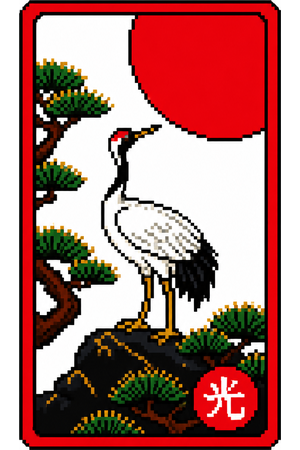
- A bright pair needs the actual bright illustrations, not just the month numbers 1, 3 or 8.
- Special overrides such as Amhaengeosa, Ttaengjabi and Gusa rematches are not implemented.
- Start with 500 chips; the ante is 10. A hand allows at most four raises across all players.
- Online uses two-card hands. Three-card practice does not submit solo rankings or achievements.
Playing a hand
- Choose two-card or three-card play, 2–4 participants including yourself, and tournament or free play.
- In three-card practice, discard one card and keep the other two.
- Call matches the current bet; raise increases it; fold leaves the current hand.
- After betting settles, remaining hands are compared. A sole remaining player wins without a showdown. Review the hand and action history before continuing.
A 13 bright pair

Read the hand before adding numbers
Check for actual bright cards, then a same-month pair, then special combinations: Ali 1–2, Doksa 1–4, Gubbing 1–9, Jangbbing 1–10, Jangsa 4–10 and Seryuk 4–6. Otherwise use the last digit of the month sum.
4–6 is Seryuk, not zero points, and beats the nine-point hand 2–7. 2–8 is zero points. The 13 and 18 bright pairs tie here; both lose to 38.
Choosing two cards from three
With a month-1 bright, month-3 bright and ordinary month-3 card, discard the ordinary card for a 13 bright pair. Discarding month 1 instead gives a weaker pair of threes.
Hand-reading practice compares two example hands. An AI personality or a large raise is not proof of a strong hand: opponents can bluff.
Settlement and records
In solo play, equal best hands share their eligible pot. A short call commits the remaining chips and competes only for funded pot tiers. Odd chips follow the table order.
The tournament ends after at most eight hands, when your chips run out, or when fewer than two players still have chips. Final placement uses remaining chips. Free play has no eight-hand cap. Classic solo wins use net chip gain per hand; the score is remaining chips.
Table chips are separate from arcade points. Neither can be cashed out. Multiplayer wins and losses use separate records.
Rules checked: 2026-10-23. These describe Dogepy’s implementation, which may differ from other tables.
Return to the game →